
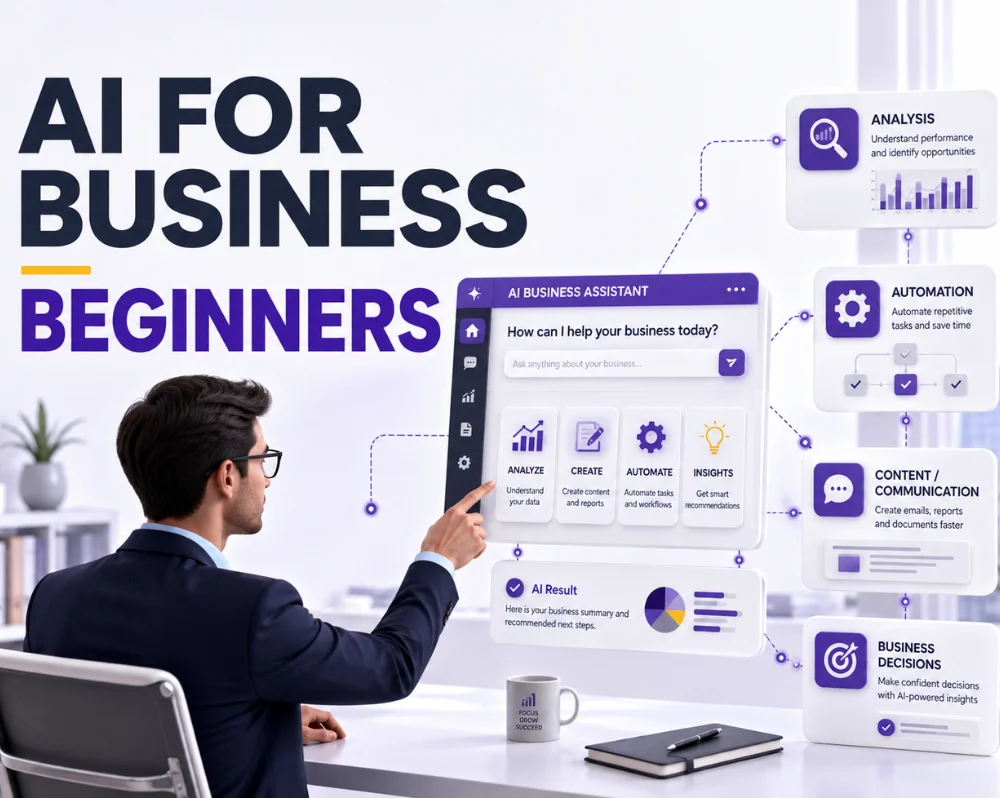

Learn how to design, structure, test, and optimize prompts for modern AI systems and Large Language Models. This practical course covers foundational and advanced prompting techniques, including zero-shot and few-shot prompting, role-based prompting, prompt chaining, iterative refinement, and responsible prompt design.
Key skills and concepts covered throughout this course.
3 outcomes
AI Prompt Engineering introduces participants to the principles and techniques used to communicate effectively with modern AI models. The course begins with the role of prompts in systems such as LLMs and chatbots, before exploring context, tokens, model limitations, and real-world applications of prompt engineering.
Participants then examine how AI models process prompts, including tokenization and attention, while developing an understanding of model behavior, bias, ethics, and common prompting pitfalls.
The course progresses into practical and advanced techniques including zero-shot, one-shot, few-shot, Chain-of-Thought, role-based prompting, prompt chaining, modular prompt design, external tools, and prompt debugging. Participants also explore applications across content creation, programming, business, healthcare, legal, and education environments.
Course Contents
Introduction to Prompt Engineering
What prompt engineering is
Understanding the purpose of prompts
Role of prompts in AI systems
Prompting Large Language Models
Prompting AI chatbots
Real-world applications of prompt engineering
Understanding Context, Tokens, and Model Limitations
Understanding context in AI interactions
What tokens are
How token limits affect prompts and responses
Context limitations
Understanding model constraints
Designing prompts around model limitations
Understanding AI Models and Their Behavior
Overview of popular AI models
GPT
BERT
T5
Differences between AI model types
How model behavior influences prompting strategies
How AI Models Process Prompts
Understanding tokenization
Introduction to attention mechanisms
How prompts are interpreted
Relationship between prompt structure and generated responses
Why similar prompts can produce different outputs
Common Prompt Engineering Pitfalls
Ambiguous instructions
Missing context
Overly broad prompts
Conflicting instructions
Poorly defined output requirements
Recognizing ineffective prompts
Improving weak prompts
Zero-Shot Prompting
Understanding zero-shot prompting
Giving instructions without examples
Selecting tasks suitable for zero-shot prompts
Improving zero-shot responses
Practical zero-shot applications
One-Shot Prompting
Understanding one-shot prompting
Providing a single example
Using examples to guide format and behavior
Improving consistency with one-shot prompts
Few-Shot Prompting
Understanding few-shot prompting
Providing multiple examples
Teaching patterns through examples
Improving output consistency
Designing effective few-shot examples
Chain-of-Thought Prompting
Introduction to Chain-of-Thought prompting
Breaking complex tasks into steps
Supporting structured reasoning
Designing prompts for multi-stage problems
Using reasoning-oriented prompts appropriately
Role-Based Prompting
Assigning roles to AI models
Defining expertise and perspective
Adding task-specific context
Using role prompts for professional scenarios
Combining roles with instructions and constraints
Iterative Prompt Refinement
Treating AI outputs as drafts
Refining prompts through multiple iterations
Asking AI to improve previous responses
Adding missing context
Adjusting tone and detail
Testing multiple prompt versions
Using Constraints and Guidelines
Defining output length
Specifying tone
Setting format requirements
Providing rules and restrictions
Defining target audiences
Using examples and reference structures
Improving consistency through constraints
Multi-Step Prompting
Breaking complex objectives into smaller tasks
Structuring sequential prompts
Managing dependencies between steps
Improving complex AI workflows
Building more reliable multi-stage outputs
Prompt Chaining
Understanding prompt chaining
Connecting multiple prompts together
Passing outputs between stages
Creating repeatable AI workflows
Managing complex tasks using prompt sequences
Modular Prompt Design
Building reusable prompt components
Separating context, instructions, examples, and output requirements
Creating standardized prompt structures
Reusing prompt modules across workflows
Improving maintainability and consistency
Fine-Tuning vs. Prompt Engineering
Understanding prompt engineering
Introduction to fine-tuning
Differences between prompting and model customization
When prompting is sufficient
When model customization may be required
Selecting the appropriate approach for a use case
Using External Tools with Prompts
Connecting prompts with external tools
Working with APIs
Using databases with AI workflows
Understanding tool-assisted AI systems
Combining model responses with external information
Debugging Prompts
Identifying why prompts fail
Diagnosing unclear instructions
Testing prompt variations
Reviewing inconsistent outputs
Correcting structural issues
Improving reliability
Optimizing Prompt Performance
Improving clarity
Reducing unnecessary instructions
Increasing output relevance
Testing multiple prompt structures
Improving consistency
Developing reusable high-performing prompts
Prompt Engineering for Content Creation
Blog content generation
Copywriting
Idea generation
Content restructuring
Tone adaptation
Improving AI-generated content through prompting
Prompt Engineering for Code Generation
AI-assisted programming
Generating code from instructions
Explaining code
Debugging assistance
Technical documentation
Creating clearer prompts for development tasks
Prompt Engineering for Business
Customer support applications
Marketing applications
Business communication
Creating role-specific prompts
Developing reusable business prompt templates
Adapting prompts to organizational requirements
Prompt Engineering in Specialized Industries
Healthcare applications
Legal applications
Education applications
Understanding domain-specific requirements
Adapting prompts to specialized contexts
Importance of human review in sensitive domains
Bias and Responsible Prompt Design
Understanding bias in AI responses
Identifying biased outputs
Designing prompts more responsibly
Ethical considerations in prompt creation
Reducing unintended or harmful outputs
Avoiding Harmful AI Outputs
Toxicity risks
Misinformation
Misleading outputs
Reviewing AI-generated information
Using human oversight
Designing prompts to improve output safety
Privacy in Prompt Engineering
Understanding privacy risks
Avoiding confidential information in prompts
Protecting personal and business data
Considering data sensitivity when using AI tools
Responsible handling of prompt inputs
Transparency and Explainability
Understanding transparency in AI interactions
Communicating appropriate AI usage
Designing clearer AI interactions
Understanding limitations in explainability
Building user trust
Legal Considerations of AI-Generated Content
Legal implications of generated content
Copyright considerations
Ownership considerations
Responsible publishing
Reviewing generated content before business use
Building Trustworthy AI Systems
Responsible prompt engineering practices
Combining prompting with human review
Improving reliability
Reducing risk
Building trust through responsible AI interactions
Future Trends in Prompt Engineering
Evolution of prompt engineering
Emerging prompting techniques
Changes in AI-model capabilities
Increasing use of tool-connected AI
Role of prompt engineering in future AI systems
Before you begin
Course requirements
Review the recommended knowledge and tools before joining.
11 requirements
Basic computer and internet skills
Basic familiarity with generative AI or AI chat tools is recommended
No advanced programming experience required
No machine learning or data science background required
Basic understanding of how AI assistants are used is helpful
Laptop or desktop computer for hands-on exercises
Stable internet connection
Access to a generative AI platform for practical prompting exercises
Basic programming knowledge is helpful for the code-generation and API sections, but not mandatory
Willingness to experiment with, test, and refine different prompt structures
No previous professional prompt engineering experience required